 Matt Lane
 | This article was originally a presentation at ALGIM 2025. It does not reflect WCC or ALGIM policy and is intended for discussion only. |
When someone moves house, is thinking about starting a business, updates their driver’s license, or registers a birth, they don’t think about which government department does what.
They just want it to work.
But our reality? Across New Zealand’s 78 councils, 39 core public service agencies, and more than 2000 crown entities we are all running different systems.
Just in the core 39 public services, NZ will spend $13 billion on technology over the next five years.
And yet, we’re still asking citizens to tell us their first name, last name, birthdate, and telephone number on different online forms, using different systems everyday.
The technology exists to fix this. So why haven’t we?

“Just as we built roads, highways, and airports in the 20th century, we must now build a digital infrastructure that is open, accessible, and empowers everyone”
Bill Gates, good with computers
Digital Public Infrastructure
So what exactly do we mean by Digital Public Infrastructure?
- Digital – technology of the internet-era
- Public – Owned by everyone, used and re-used for shared benefits. Not siloed in one agency, owned by one vendor, locked into one contract
- Infrastructure – Underlying systems, structures, and services that enable an able scale

“Siloed, bespoke technology solutions will be a thing of the past. Our target is a citizen-focused, digital-first public service like we see in other leading digital nations”
Judith Collins, Minister for Digitising Government
Minister Judith Collins has said that 30% efficiency gains are achievable through better coordination. That’s $3.9 billion over five years that could fund actual services instead of duplicated IT systems.
Twenty-three central government agencies have signaled they need to replace their finance systems in the next five years. If we do this the old way—23 separate ERP* projects—we know exactly what happens. We’ve seen it before.
To be clear: I am not arguing for a centralised ERP
(“Enterprise resource planning”, is a type of business software that centralizes and integrates core business processes like finance, HR, supply chain, and manufacturing into a single system)
ERP projects are volatile projects: ERP projects can blow out 200-300% over budget, with some consistency, in all industries. Just Google “erp project blowout”.
- Instead of saving $70 million a year as planned, Canada’s Phoenix payroll system cost to taxpayers $2.2 billion.
- The British Post Office spent £1 billion on a Fujitsu system that falsely convicted innocent people.
This is what we’re trying to avoid. And we can’t afford to repeat these failures
So the question isn’t whether we need to modernize. We do. The question is: how much more time and money should we waste before we do?

“The best time to plant a tree was 20 years ago.
The second best time is now”Warren Buffett (didn’t actually say this but it’s the kind of thing he would say)
We need secure shared pipes. We need standardised scalable components.
Here’s what we need to do. And it’s simple, but not easy:
Aotearoa needs to build secure shared pipes, shared components, that enable service organisations to build and deliver faster and easier

Estonia solved this in 2001 with something called X-Road. I do not deeply understand X-Road, but I think we can understand the pattern.
X-Road not a giant centralized database. It’s not a single government ERP. It’s a data exchange layer—secure pipes between systems. Each ministry keeps their own databases, their own IT budgets. But X-Road creates a standardized way for them to share data.
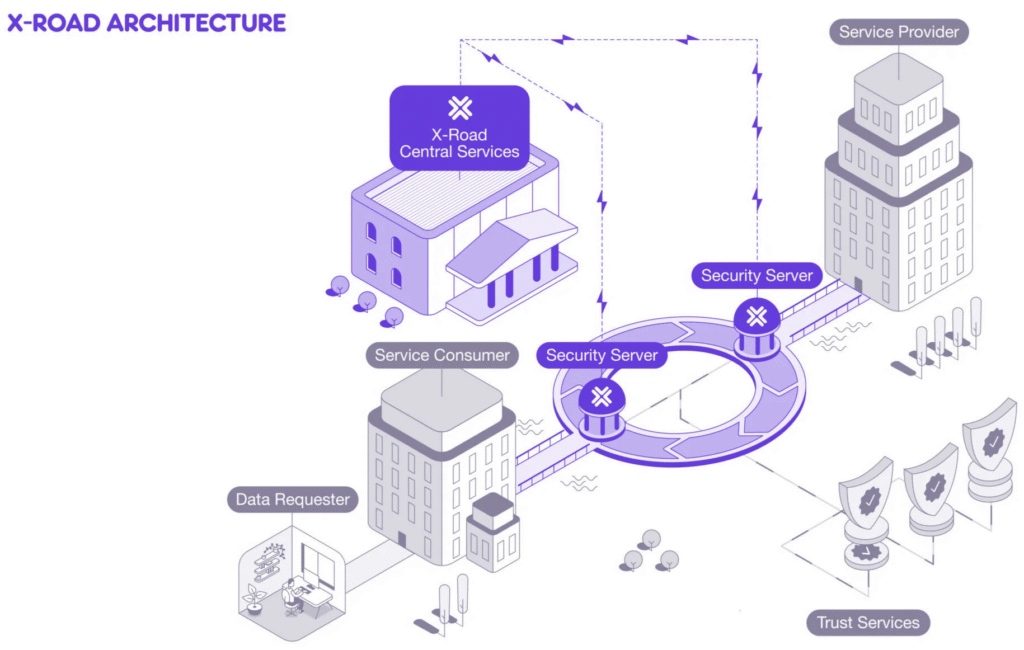
The genius is this: when a citizen updates their address once, it flows to every agency that needs it.
2.7 billion queries per year. It saves 2% of GDP annually through productivity gains.
And when Finland saw what Estonia built, they adopted it too. The platform is now open-source (MIT License) and used in over 25 countries including Iceland, El Salvador, and several states in Brazil, Mexico, and Argentina.
This isn’t theory. This is existing infrastructure handling multiple countries’ services.
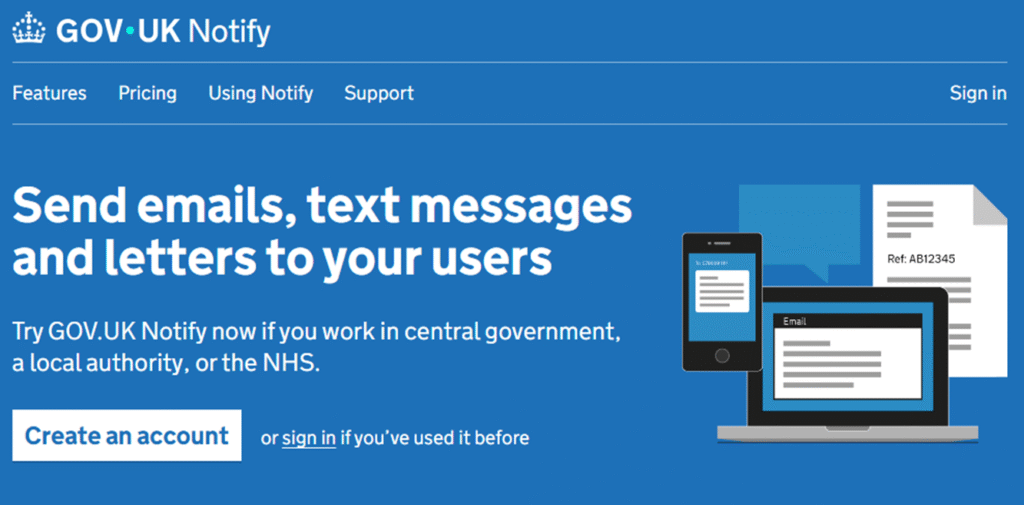
The UK’s Government Digital Service consolidating 1,882 government websites into one platform with standardised design, standardised frontend components, and standardised backend.
They all use the same payment gateway, identity verification system, notification system and have standardised the principles and practices of doing digital well in the public sector.
They saved £1-2B over 5 years.
And again most of their code is available in Github.
But again: this is not about the code, it is about the approach and thinking.

“But what can I do? I’m just one little council”
Right now, the DIA and the GCDO is progressing this stuff.
I believe over the next 18-24 months, we will see visible changes in how citizens interact with government. The question is whether local government will help shape that future or just receive whatever DIA spits out.
Local government doesn’t have to be passengers in this.

Local government IS critical infrastructure. Dollar for dollar local government delivers more services.
Rates collection, building consents, libraries, rubbish collection. These are the services that touch citizens’ lives every single day. There are 78 of us and we have unifying bodies – ALGIM is one of those – who can lobby for us, and get us at the table.
And if Digital Public Infrastructure is going to work, local government must be at the table.
Second, we have an opportunity to lead. Local government is very experienced at service delivery.
Imagine a citizen seeing multiple rates bills from different Territorial Authorities in the one central government platform.
Imagine a standardized consenting system that talks to Land Information New Zealand, to contractors, to residents.
Imagine a tourist applying for a busking license in Wellington and receiving a busking license for any location they qualify for.
We have talent and experience here in New Zealand.
I still remember “Pete the Kiwi” from Tom Loosemore’s 2014 Webstock talk.
Pete lives in Wellington.

“I had worked in local government so was well aware how challenging it can be to access quality service provisions with the modest scale and budgets they have to play with. At GDS there was always strong interest from local government right from the get-go, even though initially there was no expression of intent to support local gov. And they were generally the nicest people to work with – they were genuinely grateful at being able to leverage the platforms, generous with their time and feedback, some of the most rapid implementations, and used the platforms in some of the most innovative ways”
So my challenge to us is:
How are we going to work together and be a part of this?
